Tonight needs a map, not a feed
Deciding what to do tonight comes down to where and when. A feed is sorted by neither. Why we built Vibespot as a live map instead.
"What should we do tonight?" is a question with two coordinates in it: where, and when. A feed is sorted by neither.
That is not a knock on feeds. They are very good at what they were built for. But if you have ever stood in the kitchen on a Friday evening, phone in hand, scrolling past a concert in another state, a restaurant opening from last month and someone's vacation photos, you know the feeling of a tool answering a different question from the one you asked.
What a feed is built to do
A feed is a ranked list. Its job is to decide what you see next, and nothing in that job says the next thing has to be near you or happening soon. A post about a Saturday market can reach you on Sunday night. A show you would love can reach you from three states away.
For keeping up with people, that works. For going out, it is the problem, because the decision has a deadline. The thing you would have loved ends at nine whether or not you found it.
Going out is a where-and-when question
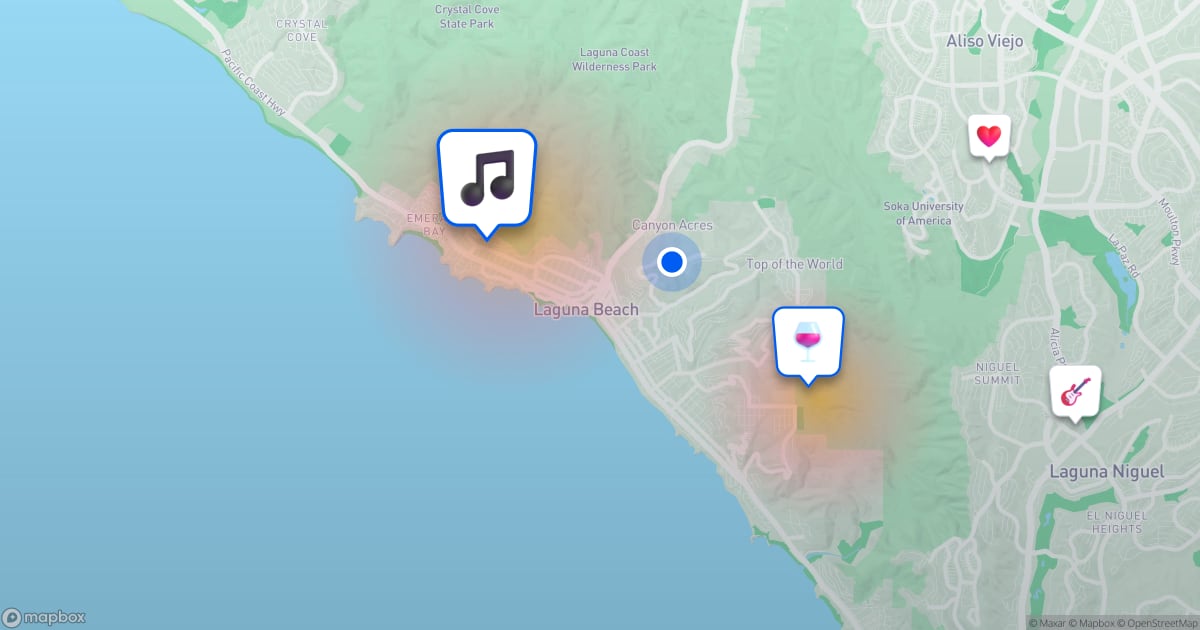
Think about how a spontaneous evening actually gets planned. Nobody starts with genre. You start with constraints: we're in Laguna Beach, we have two hours, nobody wants to drive far, it has to start soon. "What kind of thing" comes in late, and sometimes not at all. A trivia night you would never have searched for is suddenly perfect because it is a ten-minute walk away and starts in twenty.
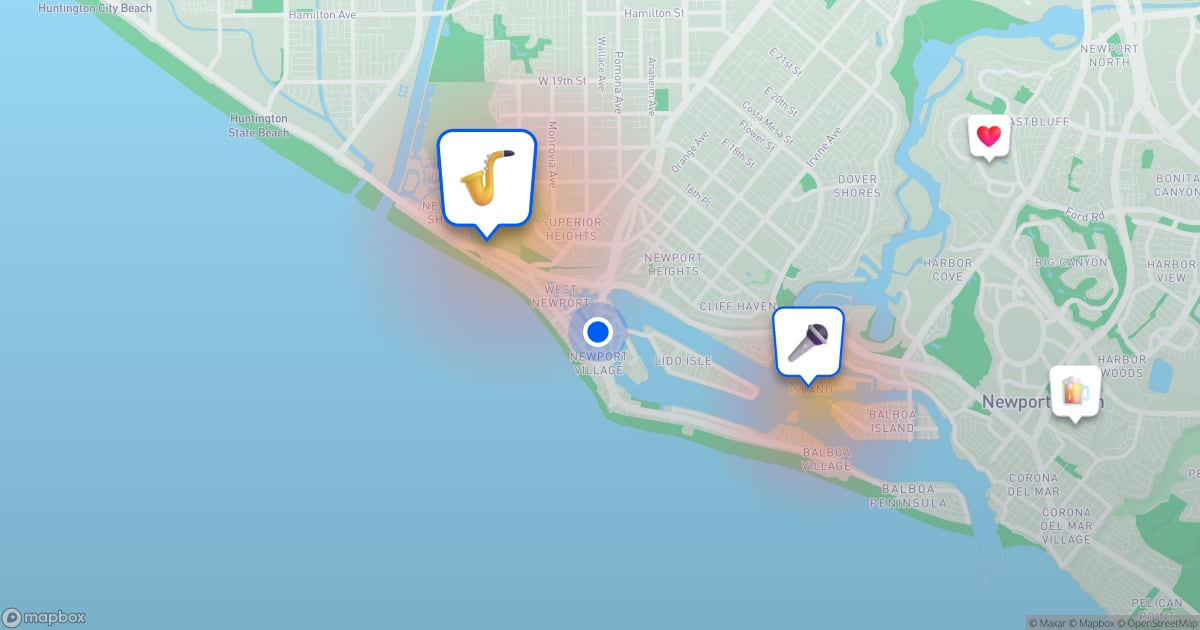
A map holds those constraints the way your head does. Near is near. Far looks far. The coastline, the freeway and the harbor are right there, so you know without doing any math that the spot across the water is a drive around, not a stroll.
Plans made three weeks out can survive a clumsy interface, because you have time to dig. The tonight decision can't. It lives or dies in the first minute, and only if the options are in front of you, arranged by the two things that matter.
The first few seconds
So we think hard about what happens when you open Vibespot. The goal is easy to say and hard to build: open the map and see what is on around you, without typing a word.
That one goal settles a lot of small decisions.
- Looking needs no account. You can browse the web map as a guest. An account comes in when you want to post.
- It can start where you are. Once you have allowed location and something is on nearby, the map opens framed around you and those vibes.
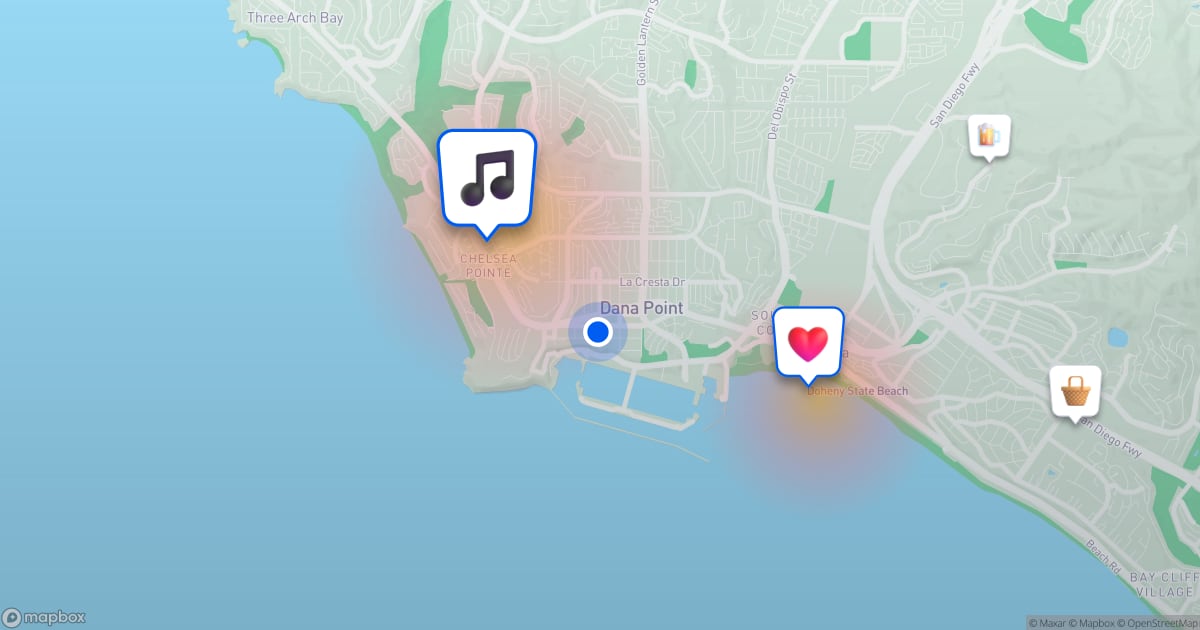
- Your town has its own address. app.vibespot.com/dana-point/ opens on Dana Point, and each town we have started with has one like it.
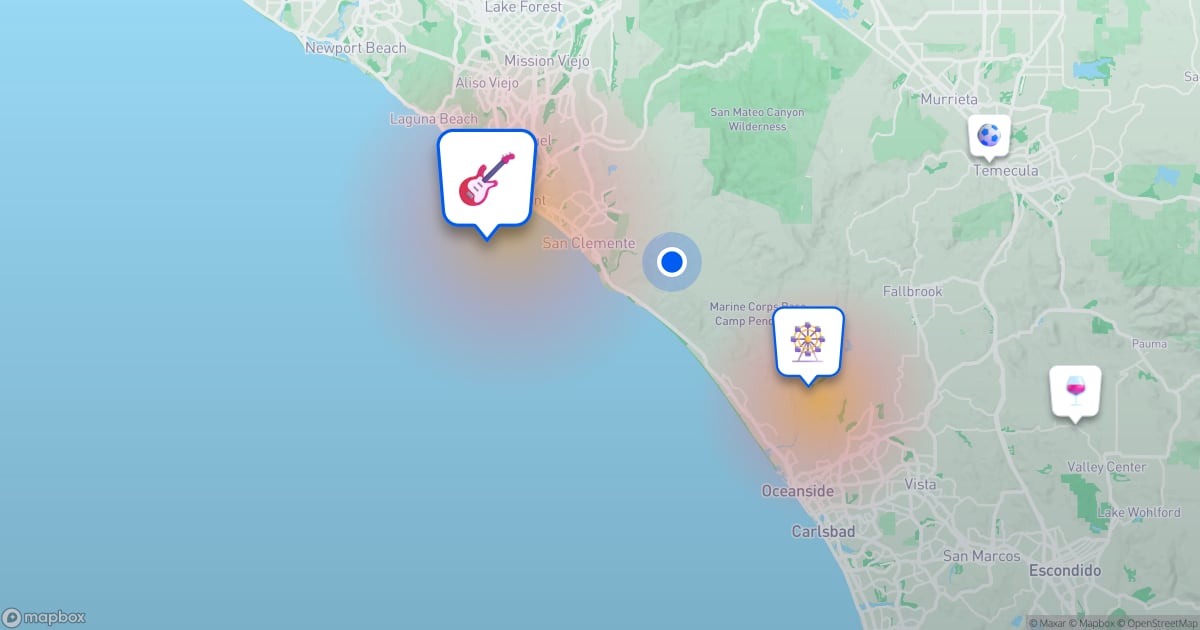
- Busy areas glow. Zoomed out, a heat map shows where vibes cluster, so you can tell at a glance whether the action is by the harbor or downtown. Zoom in and the glow fades, leaving the pins.
- Now means now. The date filter has Now and Today next to the longer ranges, and a pin for something already underway is outlined, so "is this still going?" is answered before you tap.
- The count is real. The header counts the vibes in the view you are looking at. When there are none, the map says so and offers to take you somewhere live, instead of padding the screen with things from a hundred miles away.
- A card answers the practical questions. When it starts and whether it is on now, where it is, and buttons for directions and your calendar. A listing brought in from a public events calendar is credited on its card, so you know where it came from.
None of these is dramatic on its own. Together they are the point: the first screen should be the answer, not the beginning of a search.
A feed asks what you want to see next. A map asks where you are, and shows you what is there.
What a map asks of us
A map has a weakness a feed doesn't: it cannot hide an empty space. A feed can always find something to put in front of you. A map of a quiet Tuesday is a quiet map, and it looks like one.
We think that honesty is worth keeping, but it puts the burden on us to fill the map. That is why Vibespot brings in public event listings from day one and credits each one to where it came from. It is also why, once you have an account, putting something on the map takes a few steps: paste a link to the event page and the app reads the details off it, or describe the event in a voice note, then check what it filled in before you publish.
A pop-up, a live set, a beach cleanup, a tasting: if it is happening and people can show up, it belongs on the map. If you run a venue or organize events, here is how to get set up.
It also means not turning into a feed. There are obvious reasons to want one, and time in the app is the first of them. Our bet runs the other way. The best visit to Vibespot is a short one: you open it, you spot something ten minutes away that starts at eight, you close it and go.
Not against feeds, just for tonight
Feeds are good at keeping up with people and at surfacing things you didn't know to look for. We scroll them too. But when the question is tonight, and the answer has to be close enough to reach and soon enough to matter, the right shape for it is one of the oldest tools people have for finding their way: a map, with you in the middle.
Six towns from Newport Beach down to Carlsbad have their own map address: Newport Beach, Laguna Beach, Laguna Niguel, Dana Point, San Clemente and Carlsbad. Open yours, set the date to Today, and see what is close.